Barev (Hello in Armenian)!
When trying to decide which coffee beans to purchase, many of you have asked me which is best. I always give the same answer: "I really don't know...I don't drink coffee." Within a few minutes after drinking I feel nervous, followed by a dismal feeling that the world around me is crashing down. Although I love the immediate flavor, which lasts only for a few minutes, it's not worth the aftereffects, which linger for hours.
It has become increasingly difficult to avoid drinking coffee here in Armenia. It often just magically appears in front of me. Fearing that it would be impolite to refuse, I drink it, enjoy it for a couple minutes, and suffer the consequences for the rest of the day. In fact I'm feeling some withdrawal as I'm writing this. It's quite uncomfortable.
Armenian merchants from the Ottoman Empire brought coffee to the South Caucasus in the 17th century. And the Ottomans got it via imperial expansion into the the Arabian peninsula, where Persian trade networks brought the bean from Ethiopia. Just another chapter in the book of global trade. I'm sure you know the type of coffee I'm talking about: finely grounded beans muddy at the bottom of a small cup: very strong, very thick, very tasty.
There was some minor pushback. Most people drank wine from their local grapes, concoctions made from local herbs, or a savory yogurt drink called "tan" made from the milk from their own cows (and of course they still do). Suddenly this strange foreign beverage arrives. At first some people associated coffee with urbanism, intellectualism, and idleness. Some clergy even debated whether or not it was moral to be intoxicated by it. But these concerns all quickly faded, and by the 18th century coffee became woven into everyday life in Armenia. It remains dominant in the culture today, much to the dismay of my nerves.
The story of coffee is emblematic of wider concepts in this region: what is Armenian? What is Russian? What is European? What is foreign? Several times I've heard such questions in one form or another in just the 2 weeks that I've been here. In a region where there have been so many cross-cultural interactions for thousands of years, I suppose that questions of identity emerge quite naturally. When it comes to coffee, some people describe it as "Armenian;" some people describe it as "Turkish," and some people will give a history of it just as I've done. When it comes to wider scale discussions of national identity, some people describe Armenia as a part of Europe, some look towards Russia, and some take on more nationalist overtones and focus on the uniqueness of the country. Of course any number of those three can overlap in interesting ways. The point is that identity - either on a small scale concerning food/drinks or on a larger scale concerning national sentiments - has always been fluid.
This fluidity is often tied to strong personal emotions. It's why identity is such a strong force in the world. Here's an example. On Saturday I went to a village called Vartablur. Literally "Rose Hill." Some pictures.
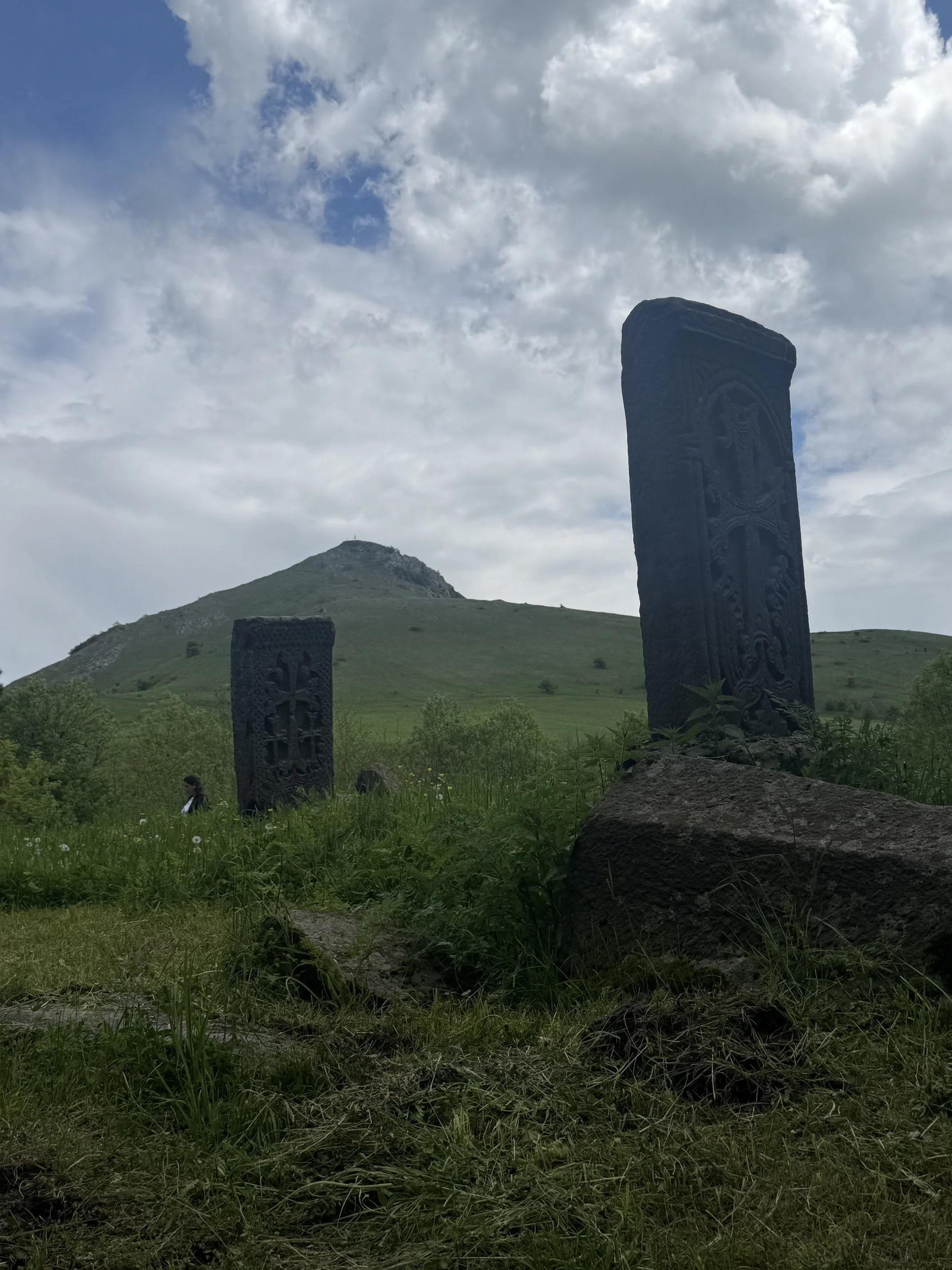
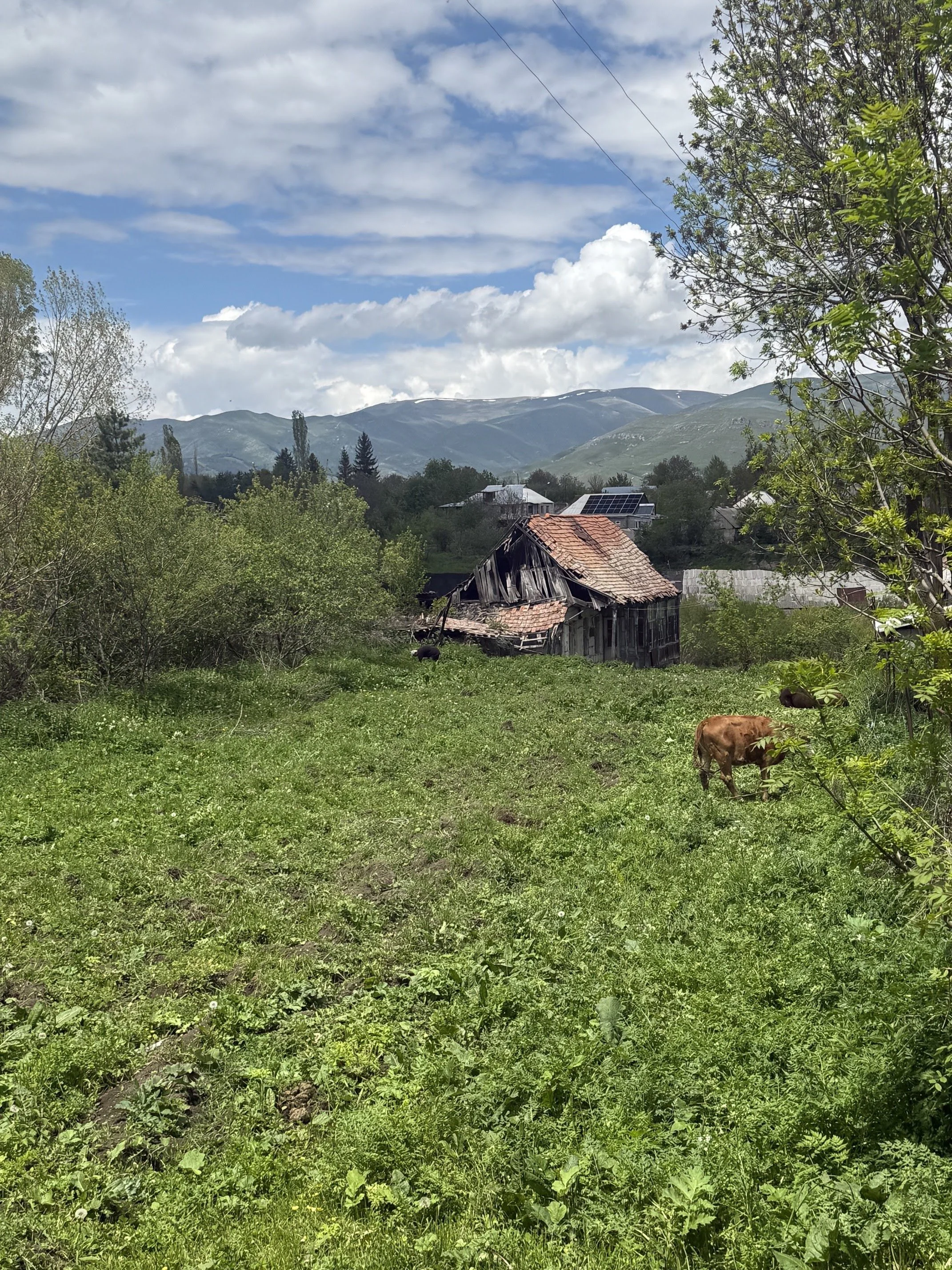
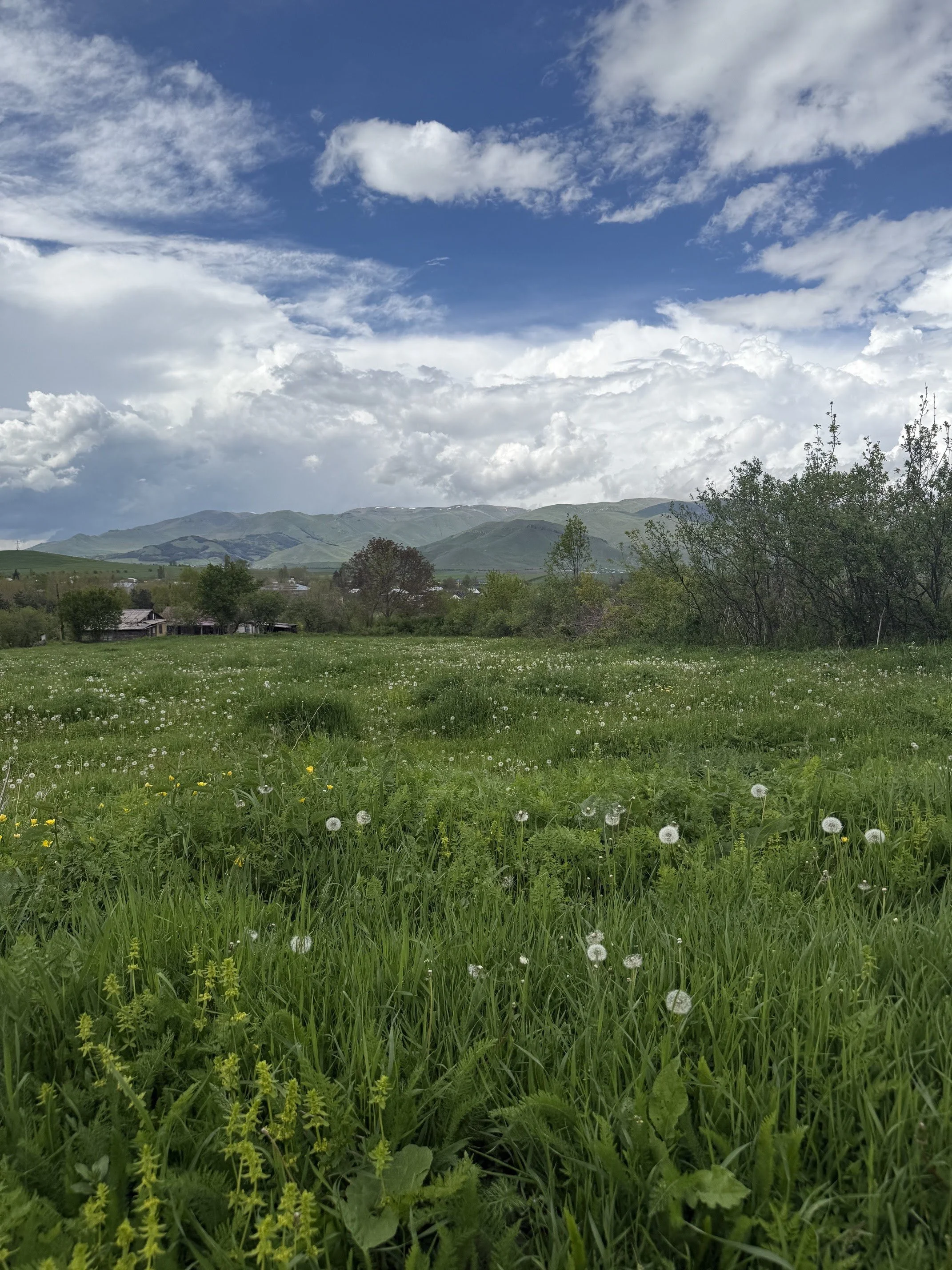
I came here specifically to see a concert of songs memorialized by Armenia's famous ethnomusicologist Soghomon Soghomonian, commonly referred to as his priestly ordination name of Komitas Vartapet. He was born in the Ottoman Empire to Armenian parents in 1869. At the age of 11 he became an orphan and was sent to Gevorkian Seminary in modern-day Armenia, which was then the Russian Empire. The bishops there quickly realized that he was quite the singer. Eventually as he grew older Komitas travelled to different regions of Armenia. He collected folk songs in each village. Vartablur was one of these villages. He was inspired by its beauty, formally notated the songs that the farmers sang, and then artistically adapted them into arrangements that could be presented as concert pieces. Komitas also reworked the music of the Armenian church liturgy, which during his time he believed to have been overly influenced by "European" and "Russian" tonalities. In a time when Armenia was facing imperial influence from all different directions - Turkic, Persian, Russian - Komitas felt that he was preserving Armenian ethnic identity. But perhaps "creating" is a better word than "preserving." The reality is that Armenia and all peoples on this continent have always been in contact with one another. Cultures are constantly evolving and shifting as a result of interconnectedness, one of the most important driving forces of history.
Since I'm naturally drawn to such landscapes and to Armenian history, I felt quite emotional - and indeed comfortable - hearing such beautiful music in such a beautiful setting. With vendors nearby selling local honey, jams, and herbs no less. Have a listen by clicking here. This video is after the concert when the singer walked over to sing for an old man because he was too sick to attend.
It's all the more poignant because Komitas was a victim of the Armenian genocide. It's a tragic story.
My feelings from being in Vartablur on Saturday linger, even though they're the result identities that have been created and imagined by myself and Komitas. These constructions are all part of the many things that make life wonderful and beautiful and meaningful. Yes they are constantly changing. Yes they are consciously or unconsciously invented and imagined one way or another. But imagination and construction do not imply that there is a lack of authenticity, as if identity somehow ought to transcendently exist outside the realm of human action. For this reason I'm not so sure that the questions of "What is Armenian/Russian/European/foreign" make much sense. I believe we instead should be asking, regardless of imagined identity, "how did this item that I am consuming come into my hands?" Did it come into my hands because someone with the heart and soul of Komitas who lives on the side of Rose Hill grew it and sold it to me? Or did it come into my hands from far away via systems of imperial expansion (or via a multinational company tied to an oligarch, to make the example more modern)? Similar questions can of course be said about anything we consume: music, art, media, etc.
While global supply chains - the "coffees" of the world - and "locality" - the "Komitases" of the world - both have all sorts of constructions and imaginations weaved into them based on who were are, how were grew up, and who we interact with, the lingering effects from them are very different. That of the "coffees" of the world make me nervous. That of the "Komitases" of the world make me comfortable. And they certainly are not imagination. Whether one chooses to "live with coffee" or to "live with Komitas" has real life lingering effects on ecology, wealth distribution, and human health. Let's do our best to listen to Komitas's music.
For the record I still sell coffee. Good coffee too (from what others have told me) from good local businesses.